


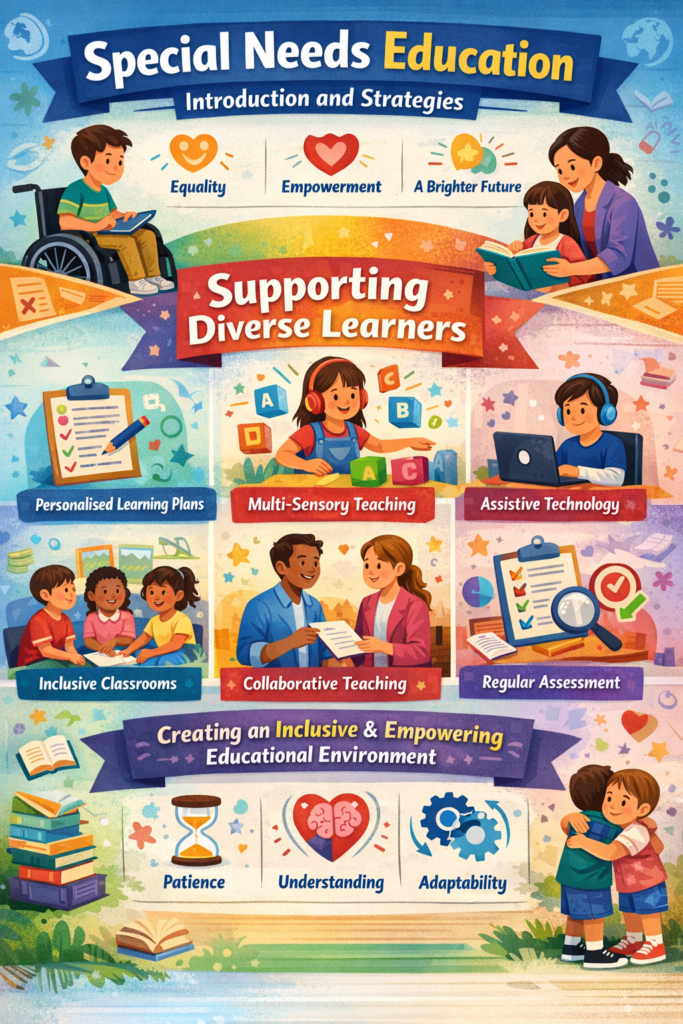
Special Needs Education: Introduction and Strategies
Special needs education plays a. crucial role In ensuring that all learners receive the support they need to succeed. academically And. personally . Students with diverse learning requirements often face unique challenges that traditional teaching methods may not adequately address. To bridge this gap, educators must adopt targeted strategies that foster an. inclusive And. effective learning environment .
This introduction explores. seven practical strategies Designed to support special needs education, highlighting approaches that:.
- Enhance engagement
- Promote independence
- Accommodate individual differences
By implementing these methods, teachers can create a more accessible and empowering classroom experience, helping students reach their full potential.
Understanding and applying these strategies Not only benefits students with special needs but also enriches the learning experience for. all Learners, cultivating:.
- Empathy
- Patience
- Adaptability
Within the educational community.
Understanding Diverse Learning Needs
In the realm of education, recognising and effectively addressing diverse learning needs is fundamental to creating an inclusive and supportive environment where every learner can thrive. This section delves into the different types of special educational needs (SEN) and highlights the importance of understanding each learner’s individual learning profile to tailor educational approaches effectively.
Types of Special Educational Needs
Special educational needs cover a wide range of conditions that impact a learner’s ability to access the curriculum in a typical manner. These needs may be cognitive, physical, sensory, emotional, or behavioural in nature. Some of the most common categories include:.
- Learning Disabilities: These refer to difficulties in acquiring and using skills such as reading, writing, or mathematics. Dyslexia , for example, affects reading and spelling, while dyscalculia impairs numerical understanding and calculation skills.
- Autism Spectrum Disorders (ASD): This encompasses a variety of neurodevelopmental conditions that affect social communication and interaction, alongside restricted and repetitive behaviours. Learners with ASD often require structured environments and clear routines.
- Physical Disabilities: These include impairments that limit mobility or physical functioning, such as cerebral palsy or muscular dystrophy. Such conditions often necessitate adaptations in the classroom layout, assistive technologies, or physical support.
- Speech and Language Disorders: Difficulties here affect a learner’s ability to express themselves or comprehend spoken language, which can impact social interaction and academic progress.
- Emotional, Social, and Behavioural Difficulties: Learners facing these challenges might experience anxiety, depression, or behavioural issues that interfere with concentration and participation in learning activities.
- Sensory Impairments: Hearing or visual impairments also require specialised support, including the use of hearing aids, braille, or other communication tools.
Understanding these categories is the first step for educators to identify the appropriate support mechanisms and interventions.
Individual Learning Profiles
While categorising special educational needs provides a broad framework, it is vital to recognise that every learner is unique. An individual learning profile is a comprehensive picture of a learner’s strengths, challenges, preferred learning styles, and motivational factors. This profile goes beyond diagnostic labels to consider how each learner interacts with content, processes information, and responds to different teaching methods.
For instance, two students diagnosed with dyslexia may have very different coping mechanisms, strengths in verbal reasoning or creativity, and varying levels of support required. Similarly, a learner with ASD may excel in visual learning but find social communication particularly challenging.
Developing an individual learning profile involves several key steps:.
- Detailed Assessment: Using a variety of assessment tools to identify cognitive abilities, learning preferences, emotional well-being, and social skills.
- Personalised Planning: Designing tailored learning plans that adapt teaching strategies, materials, and environments to meet the learner’s specific needs.
- Ongoing Monitoring and Review: Regularly evaluating progress and adjusting support to ensure the learner’s evolving needs are met.
- Collaborative Approach: Involving the learner, their family, educational psychologists, therapists, and other specialists to build a holistic support network.
By embracing the diversity within learning profiles, educators can move beyond a one-size-fits-all approach and foster truly inclusive classrooms. This personalised understanding empowers learners, boosts their confidence, and maximises their potential to succeed academically and socially.
Ultimately, appreciating the complexity and individuality of diverse learning needs is essential for educators committed to delivering equitable and effective education for all.
Strategy 1: Personalised Learning Plans
In the ever-evolving landscape of education, the traditional approach of delivering uniform content to all students is increasingly being recognised as insufficient. Personalised learning plans Represent a transformative strategy that places the individual learner at the heart of the educational process. By acknowledging and addressing the distinct needs, interests, and learning preferences of each student, personalised learning fosters a more engaging, effective, and inclusive educational experience.
Tailoring Education to Individual Needs
Personalised learning begins with a comprehensive understanding of a student’s unique profile. This includes their cognitive strengths and weaknesses, preferred learning styles (whether visual, auditory, kinesthetic, or a combination), and even their emotional and social development. Educators use a variety of diagnostic tools, observations, and student feedback to gather this information. Armed with these insights, they can design customised learning pathways that optimise the student’s potential.
For instance, a student who excels in visual-spatial reasoning might benefit from:.
- Infographics
- Videos
- Mind maps
Whereas a learner with strong verbal skills might engage more deeply with:.
- Discussions
- Reading
- Writing activities
This thoughtful adaptation extends beyond content to include pacing:.
- Some students may require additional time to grasp complex concepts
- Others thrive with accelerated challenges
Moreover, personalised learning plans can incorporate accommodations for students with special educational needs, ensuring equity and accessibility.
The integration of technology plays a pivotal role in enabling tailored education. Digital platforms and adaptive learning software can dynamically adjust content difficulty and presentation in response to real-time student performance, providing instant feedback and targeted support. Such tools empower educators to monitor progress closely and intervene promptly when necessary.
Setting Achievable Goals
A cornerstone of personalised learning is the establishment of clear, attainable goals that align with the learner’s current abilities and future aspirations. These goals act as motivational milestones, guiding students through their educational journey with a sense of purpose and direction. In practice, goal-setting involves collaboration between educators, students, and often parents, ensuring that objectives are meaningful and personalised.
Effective goals are SMART:.
| Criterion | Description | Example |
|---|---|---|
| Specific | Clear and precise | Increase reading comprehension level |
| Measurable | Quantifiable progress | by one grade |
| Achievable | Realistic and attainable | within three months |
| Relevant | Meaningful to learner’s needs | through daily reading exercises |
| Time-bound | Within a defined time frame | within three months |
For example, rather than a vague aim like “improve reading skills,” a SMART goal might be:.
“Increase reading comprehension level by one grade within three months through daily reading exercises.”.
Regular review sessions are essential to assess goal attainment and recalibrate plans as needed. This iterative process recognises that learning is fluid and that goals may evolve alongside the student’s development. Encouraging students to reflect on their achievements and challenges nurtures self-awareness and resilience.
Furthermore, personalised goals encourage autonomy, empowering learners to take ownership of their education. When students see their personal interests and strengths reflected in their learning objectives, motivation and engagement naturally increase, fostering a lifelong love of learning.
Conclusion
Personalised learning plans represent a dynamic and student-centred approach to education. By tailoring content, methods, and pacing to individual needs and setting achievable, meaningful goals, this strategy not only enhances academic performance but also supports emotional and social growth. In embracing personalised learning, educators can create a more inclusive, responsive, and effective educational environment that prepares students for success both inside and beyond the classroom.
Strategy 2: Multi-Sensory Teaching Approaches
Engaging Multiple Senses for Better Retention
Multi-sensory teaching approaches harness the power of engaging several senses simultaneously to significantly boost learning and retention. By stimulating visual, auditory, kinaesthetic, and tactile senses together, learners are able to form more robust neural connections, which makes recalling information easier and more reliable. This method recognises that individuals absorb and process information differently, so by activating multiple pathways in the brain, it caters to a wider variety of learning styles, including. visual learners Who benefit from seeing,. auditory learners Who benefit from hearing, and. kinaesthetic learners Who benefit from doing.
Engaging multiple senses also enhances concentration and motivation, as the learning experience becomes more dynamic and interactive. For example, when learners see. colourful images , hear explanations, and physically manipulate objects related to the topic, their engagement levels increase, making the information stick better in their memory. Moreover, this multisensory stimulation can help overcome difficulties related to attention or memory deficits by providing alternative ways to access and encode the information.
Examples of Multi-Sensory Techniques
There are numerous practical techniques educators can use to incorporate multi-sensory strategies into their teaching:.
- Visual aids : Vibrant charts, infographics, diagrams, and videos that complement verbal instruction, making abstract concepts more concrete. For instance, a science teacher might use a detailed diagram of the human body alongside an explanatory video and a hands-on model for students to explore.
- Auditory strategies : Storytelling, songs, rhymes, and mnemonic devices which help embed information through rhythm and repetition. Group discussions and verbal explanations encourage active listening and speaking, reinforcing learning.
- Kinaesthetic and tactile techniques : Physical interaction with materials such as building models, using manipulatives like blocks or beads, or engaging in role-play activities. For example, in a geography lesson, students might create a 3D map using clay or other craft materials, linking physical activity with the learning content.
- Technology : Interactive whiteboards, educational apps, and virtual reality experiences that combine visual, auditory, and kinaesthetic elements, making lessons immersive and personalised.
By integrating these varied methods, educators create a rich, multi-dimensional learning environment that not only accommodates different learning preferences but also:.
- Deepens understanding
- Encourages participation
- Enhances long-term retention of knowledge
Strategy 3: Use of Assistive Technology
Types of Assistive Devices
Assistive technology refers to a broad spectrum of tools and devices designed to support learners with a variety of needs, enhancing their ability to access, engage with, and demonstrate understanding of educational content. Common types of assistive devices include:.
- Screen readers: Convert digital text into spoken words, benefiting students with visual impairments or reading difficulties.
- Speech-to-text software: Allows learners who struggle with writing or typing to express their ideas verbally, which the software then transcribes into written form.
- Hearing aids and FM systems: Amplify sound for students with hearing loss, ensuring they can follow lessons more effectively.
- Specialised keyboards: Such as those with larger keys or alternative layouts, support students with motor difficulties.
- Communication boards or speech-generating devices: Assist non-verbal learners in expressing themselves.
- Adaptive software programmes: Customised for specific learning challenges such as dyslexia, attention deficit disorders, or memory impairments, providing tailored support.
Emerging technologies:.
- Eye-tracking devices and brain-computer interfaces offer new ways for learners with severe physical disabilities to interact with digital content.
- Mobile apps designed for time management, organisation, and study skills complement the suite of assistive tools available.
Benefits for Learners
The implementation of assistive technology in educational settings delivers numerous benefits, fundamentally transforming the learning experience for students with disabilities or learning difficulties:.
- Promotes greater independence: Enables learners to access information and complete tasks without constant assistance, fostering self-confidence and motivation.
- Personalises education: Accommodates diverse learning styles and challenges, allowing students to engage with material at their own pace and preferred manner.
- Facilitates inclusion: Removes barriers that might isolate learners, promoting social interaction and collaboration. For example, a student using a speech-generating device can participate in class discussions equally.
- Enables accurate assessment: Mitigates the impact of disabilities on performance, allowing educators to better understand a learner’s true capabilities.
- Encourages critical skill development: Supports digital literacy and problem-solving skills essential for further education and employment.
In summary, Assistive technology is a powerful strategy that not only supports learners with specific needs but also enhances the overall educational experience by promoting equity, accessibility, and empowerment.
Strategy 4: Creating Inclusive Classroom Environments
Designing Supportive Spaces
Creating an inclusive classroom environment requires deliberate planning and consideration to ensure that every student feels welcomed, valued, and supported. The physical layout of the classroom plays a pivotal role in this.
- Desk and Furniture Arrangement: Facilitate easy movement, especially for students with mobility challenges who may use wheelchairs or other aids.
- Quiet Zones or Sensory Corners: Provide safe retreats for learners needing sensory breaks or moments of calm, helping regulate emotions and focus.
- Diverse Learning Materials: Include visual aids, tactile resources, and assistive technologies to cater to different sensory preferences and learning styles.
- Clear, Accessible Signage and Labels: Aid navigation and promote independence for students with learning difficulties or language barriers.
Beyond the physical space, the emotional environment is equally critical:.
- Culture of Respect and Empathy: Teachers should model inclusive language and behaviours.
- Celebration of Cultural Diversity: Use displays and classroom activities to enrich students’ appreciation of different backgrounds and perspectives.
- Swift and Sensitive Response to Discrimination: Address incidents of bias immediately to maintain a safe atmosphere.
- Student Involvement in Classroom Norms: Encourage ownership and accountability, reinforcing positive interactions and mutual respect.
Promoting Peer Inclusion
Peer inclusion is a cornerstone of an effective inclusive classroom, as social connections significantly impact students’ sense of belonging and academic success.
- Collaborative Learning Strategies: Group projects, paired work, and cooperative games encourage interaction and teamwork.
- Buddy Systems: Pair students to provide academic help and social companionship, invaluable for newcomers, those with special educational needs, or students feeling isolated.
- Peer Mentoring Programmes: Older or more experienced students develop leadership skills while guiding and encouraging peers.
- Clear Classroom Expectations: Emphasise kindness, respect, and active listening to create a respectful community.
- Celebration of Achievements: Recognise both individual and group successes—academic, social, or creative—to foster a positive classroom identity.
Incorporating social-emotional learning (SEL) is another powerful strategy:.
- SEL Activities: Teach students to recognise and manage emotions, develop empathy, and navigate social situations effectively.
By embedding these practices, educators cultivate an inclusive environment where diversity is embraced, differences are celebrated, and all students are empowered to thrive academically, socially, and emotionally.
Strategy 5: Collaborative Teaching and Support
Collaborative teaching and support represent a powerful strategy to elevate the educational experience, ensuring that all students receive the attention and resources they need to thrive. This approach capitalises on the collective expertise of educators and specialists, fostering an inclusive, responsive, and dynamic learning environment.
Team Teaching Models
Team teaching is a cooperative instructional approach where two or more educators jointly plan, deliver, and assess lessons. This method allows teachers to combine their unique strengths—be it subject expertise, pedagogical techniques, or classroom management skills—to create a more engaging and effective learning experience. Various models of team teaching exist, each with distinct advantages:.
- Co-Teaching: Both teachers share responsibility for planning and instruction, often delivering lessons simultaneously to the whole class. This model encourages continuous interaction and immediate support for students.
- Parallel Teaching: The class is divided into smaller groups, with each teacher delivering the same lesson concurrently. This reduces student-to-teacher ratios, promoting personalised attention and better engagement.
- Station Teaching: Students rotate through stations, each managed by a different teacher or educator. This allows for varied instructional methods and caters to diverse learning styles.
By implementing these models, educators can more effectively differentiate instruction, address varied learning needs, and provide timely feedback. Team teaching also fosters professional growth, as teachers learn from each other’s strategies and perspectives.
Involving Specialists and Support Staff
Beyond the classroom teachers, specialists and support staff play a crucial role in enhancing student outcomes. Professionals such as speech and language therapists, educational psychologists, occupational therapists, and learning support assistants bring specialised expertise to address specific challenges faced by learners.
Involving these specialists ensures that students with diverse needs receive tailored interventions, promoting equity and inclusion. For instance, speech therapists can assist students with communication difficulties, while educational psychologists can provide insights into cognitive and emotional challenges, informing personalised learning plans.
Collaboration between teachers and support staff encourages a holistic approach to education, integrating academic instruction with social, emotional, and developmental support. Regular communication and joint planning sessions enable the team to monitor progress, adjust strategies, and celebrate successes collectively.
Furthermore, this inclusive teamwork nurtures a classroom culture grounded in empathy, respect, and understanding. Students witness the value of diverse roles working harmoniously, which can positively influence their social interactions and attitudes towards learning.
In summary, collaborative teaching and support harness the strengths of multiple professionals to create a richer, more supportive educational environment. By embracing team teaching models and actively involving specialists, schools can better meet the varied needs of their students, fostering success and well-being for all learners.
Strategy 6: Regular Assessment and Feedback
Monitoring Progress Effectively
Regular assessment is an indispensable element in ensuring that any strategy stays aligned with its objectives and delivers the desired outcomes. Effective monitoring requires more than simply checking off completed tasks; it involves a systematic approach to measuring progress against clearly defined, quantifiable milestones. These milestones should be. specific, measurable, achievable, relevant, and time-bound (SMART) , providing a solid framework for tracking advancement.
To monitor progress effectively, organisations and individuals should adopt suitable tools and techniques such as:.
- Performance dashboards
- Key performance indicators (KPIs)
- Real-time data analytics
These resources enable timely visibility into the current state of affairs, helping to detect any deviations from the planned trajectory early on. Early identification of issues is critical, as it allows for prompt interventions that prevent minor setbacks from escalating into major problems.
Moreover, regular progress reviews encourage accountability among team members and stakeholders. When everyone involved understands the metrics being used and the importance of hitting targets, it fosters a culture of responsibility and shared commitment. Importantly, assessment should not be viewed as a punitive exercise but as an opportunity to celebrate successes and recognise areas for growth. This positive framing motivates continuous effort and improvement.
Adapting Strategies Based on Feedback
The process of gathering feedback is fundamental to a responsive and resilient strategy. Feedback can come from various sources, including:.
- Internal team reflections
- Client or customer input
- Market analysis
- Performance data
Once collected, it is essential to analyse this information critically to identify trends, strengths, weaknesses, and emerging challenges.
Adapting strategies based on feedback requires:.
- A mindset open to change
- A willingness to pivot when necessary
In dynamic environments—whether in business, education, or personal development—rigid adherence to an initial plan can hinder progress and limit potential. Instead, flexibility enables decision-makers to:.
| Benefits of Adaptation | Description |
|---|---|
| Refine goals | Adjust objectives to better fit new circumstances |
| Reallocate resources | Shift effort and funding where it is most effective |
| Adjust tactics | Modify actions based on fresh insights or changing conditions |
Effective adaptation also involves. clear communication Across all levels of the organisation or team. Sharing feedback openly ensures that everyone understands the rationale behind changes and feels involved in the evolution of the strategy. This transparency builds trust and collective ownership, which are critical for successful implementation.
In summary , regular assessment and feedback create a continuous improvement loop that keeps strategies relevant, realistic, and results-driven. By diligently monitoring progress and embracing constructive feedback, organisations and individuals can navigate complexities and uncertainties with greater confidence, enhancing their chances of achieving sustained success.
Strategy 7: Encouraging Social and Emotional Development
Building Confidence and Resilience
Fostering confidence and resilience in children is fundamental to their overall development and long-term well-being. Confidence Empowers children to approach new experiences and challenges with a positive mindset, while. resilience Equips them with the skills to cope with setbacks and adapt to change. To build these qualities effectively, it is essential to create a nurturing and supportive environment where children feel safe to express their feelings and take risks without fear of harsh judgement or failure.
One effective way to nurture confidence is by encouraging children to set. achievable, incremental goals . Celebrating successes, however small, reinforces their sense of accomplishment and motivates them to keep trying. It is equally important to normalise mistakes and setbacks as natural parts of the learning process, helping children understand that failure is not a reflection of their worth but an opportunity to grow. Teaching practical coping strategies, such as:.
- Deep breathing exercises
- Mindfulness techniques
- Positive self-talk
Can empower children to manage stress and regulate their emotions more effectively. Additionally, providing consistent and genuine praise that focuses on. effort rather than innate ability Helps children develop a. growth mindset , fostering perseverance and resilience.
Parents, educators, and caregivers play a crucial role by modelling resilient behaviour themselves — demonstrating how to handle challenges calmly and positively sets a powerful example for children to emulate. Encouraging reflection on past difficulties and discussing how they were overcome also strengthens children’s belief in their own capacity to manage adversity.
Supporting Peer Relationships
Healthy peer relationships are a cornerstone of social and emotional development, contributing significantly to a child’s sense of belonging and self-esteem. Supporting children in cultivating these relationships involves guiding them to recognise and interpret social cues, practise empathy, and develop effective conflict resolution skills.
Creating regular opportunities for group activities and cooperative play is invaluable. These settings encourage children to engage in:.
- Sharing
- Turn-taking
- Teamwork
Which are essential social skills. Facilitating diverse social interactions also exposes children to a variety of perspectives and experiences, helping them appreciate differences and develop inclusivity.
Adults can further support peer relationships by modelling positive social behaviours such as:.
- Active listening
- Respectful communication
- Kindness
When disagreements arise, guiding children through constructive conversations about their feelings and viewpoints teaches them how to resolve conflicts amicably. Encouraging open dialogue about emotions and social situations helps children develop emotional literacy, enabling them to understand their own feelings and those of others.
Moreover, fostering peer support networks where children feel comfortable seeking and offering help reinforces trust and cooperation. These social bonds provide a vital support system that enhances emotional well-being and reduces feelings of loneliness or exclusion.
By prioritising social and emotional development through these strategies, we equip children with the essential skills to navigate relationships confidently and resiliently, laying a strong foundation for their future personal and social success.
Conclusion
Special needs education requires a thoughtful and tailored approach to ensure every learner achieves their full potential. By implementing these seven strategies—such as. personalised learning plans ,. inclusive classroom environments , and. collaborative support networks —educators and caregivers can create a nurturing and effective educational experience.
Emphasising patience, understanding, and adaptability Not only benefits students with special needs but also enriches the entire learning community.
Ultimately, supporting diverse learners with these strategies promotes:.
- Equality : Ensuring fair access to education
- Empowerment : Building confidence and independence
- A brighter future : Creating opportunities for lifelong success
By embracing these principles, educators and caregivers contribute to a more inclusive and supportive educational environment for all.